

AI, Search, Digital Marketing, Business Strategy
AI Search vs Google Search: What Every Business Owner Should Know
Search is no longer just a list of blue links. In 2026, artificial intelligence is reshaping how customers discover brands, compare options, and make decisions. Understanding the difference between AI search and traditional Google search is now a strategic advantage—not a “nice to have.”

AI Search vs Google Search
How the new search landscape impacts your business
What Is AI Search?
AI search uses advanced language models and machine learning to understand questions in natural, conversational language and respond with synthesized answers rather than just links. Think of it as asking a smart assistant, not typing into a directory.
By 2026, AI search has matured in several important ways, according to industry analyses from Forbes and Gartner. It can:
- Understand complex, multi-part questions using advanced natural language understanding, even when users are vague or informal.
- Offer highly personalized answers based on behavior, past conversations, and context, not just keywords.
- Combine multiple formats—text, images, voice, even documents—into a single, coherent response (often called multimodal search).
In practice, that means a potential customer could ask, “What’s the best accounting software for a 10-person marketing agency in London, and how do I migrate from spreadsheets?” and receive a tailored, step-by-step answer instead of having to click through ten different websites. For businesses, this shifts the battle from ranking for one keyword to becoming a trusted source that AI is confident citing and summarizing.
How Google Search Is Evolving in 2026
Google Search remains the dominant gateway to the web, but it is no longer “just” a traditional search engine. In 2026, Google combines its classic ranking systems with powerful AI features like AI Mode and AI Overviews, powered by its Gemini models. Google reports that AI Mode alone now serves over a billion users each month, underscoring how mainstream these experiences have become.
Behind the scenes, Google continues to roll out frequent core and spam updates—such as the March and May 2026 core updates and multiple spam updates—to refine how it evaluates quality, relevance, and spammy tactics. These updates can dramatically shift rankings, especially for sites with thin, duplicated, or over-optimized content (as tracked by SEO monitoring firms like DemandSphere and Connectica).
At the same time, the front-end experience is changing:
- The intelligent search box allows longer, conversational queries and accepts text, images, and files in a single interaction.
- AI Overviews summarize answers at the top of results, then link to relevant articles, expert advice panels, and social perspectives from places like Reddit.
- New search agents can monitor topics—like price drops or local availability—and send users synthesized updates automatically.
For business owners, this means Google is now both a search engine and an AI assistant. Your content must satisfy both the traditional ranking systems and the AI layer that decides what to summarize and surface first.
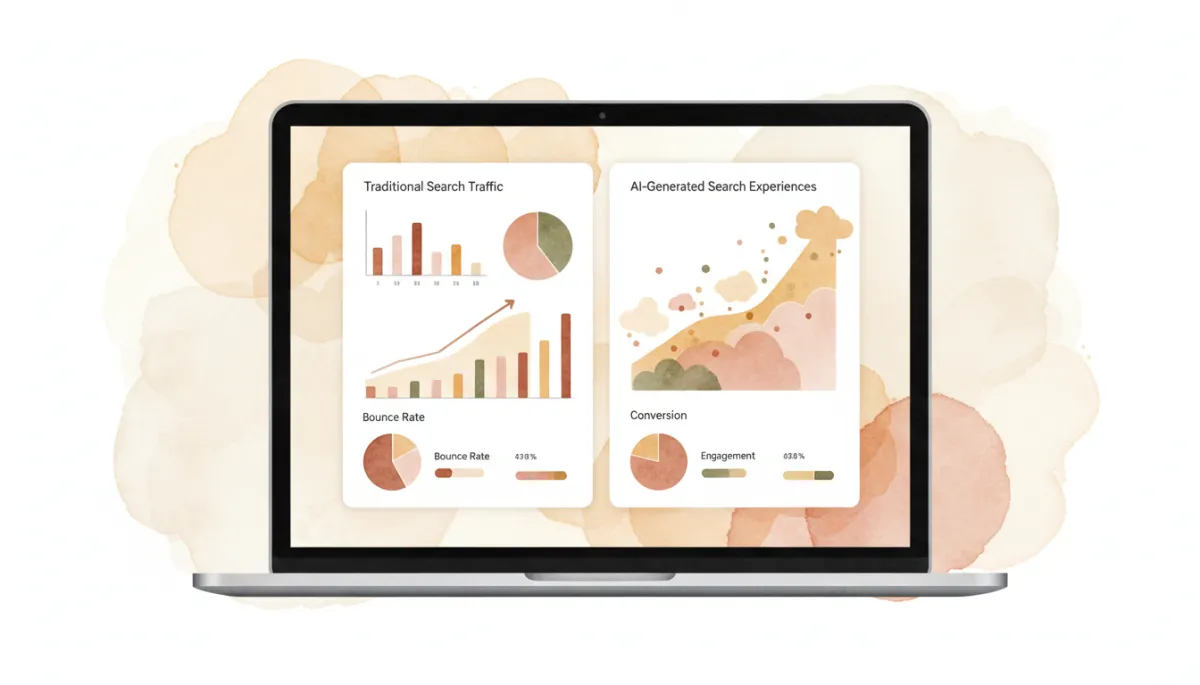
Businesses now track separate performance from classic rankings and AI-driven search experiences.
AI Search vs Google Search: The Key Differences
While Google is rapidly integrating AI, it still behaves differently from standalone AI search tools or assistants. A 2023 Forbes analysis and later research highlight several important contrasts that are now clearly visible in 2026:
- Interaction style: AI search is conversational and iterative—you can ask follow-up questions naturally. Traditional Google search is still primarily query–result–click, even with AI Overviews layered on top.
- Context and memory: AI assistants can remember previous questions in a session and sometimes across sessions, giving more context-aware answers. Google remembers history for personalization, but not full, human-like conversations in most cases.
- Output format: AI search often delivers a single, synthesized answer or plan. Google still emphasizes a mix of summaries, rich snippets, and links so users can explore sources directly.
- Source selection: Studies of AI Overviews show that Google’s AI sometimes cites sources that don’t appear in the top traditional results at all, meaning AI is using a distinct, curated view of the web.
What Every Business Owner Should Know (And Do) Now
The bottom line: your customers are increasingly getting answers, not just links. To stay visible and win trust in both AI search and Google search, focus on these priorities:
- Create genuinely helpful, expert content. AI systems favor clear, in-depth, non-clickbait answers. Invest in guides, FAQs, and resources that directly solve customer problems in plain language.
- Structure information so AI can “read” it. Use headings, bullet points, and concise summaries so both Google’s ranking systems and AI models can easily extract key points for overviews and answers.
- Protect your reputation. Spam updates in 2026 show Google is serious about cloaking, hacked content, and auto-generated junk. Shortcuts are more likely to get you filtered out of both search and AI experiences.
- Monitor AI-driven traffic separately. As AI Overviews and agents send more visits, ask your marketing team or agency to track how users arrive—through classic results, AI summaries, or assistant-style experiences—and adapt your strategy accordingly.
- Think beyond keywords. Customers are asking full questions and expecting personalized guidance. Build content and offers around journeys—“research, compare, decide”—rather than isolated search terms.
💡 Practical next step: Choose your top three customer questions and create one comprehensive, conversational answer page for each. This single move can improve your visibility in both AI search tools and Google’s AI Overviews.
Final Thoughts
AI search is not replacing Google search; it is redefining it. For business owners, the opportunity lies in meeting customers where they are: asking detailed questions, expecting instant clarity, and relying on AI to filter the noise. If your brand consistently provides trustworthy, well-structured, and customer-first information, you will be well positioned—no matter how the search box evolves next.
Ready for the Future of Search?
Search is evolving. Customers are no longer relying only on traditional search engines—they’re also turning to AI-powered search experiences to research products, compare services, and make buying decisions.
At MociDigital, we help businesses build a search strategy that’s ready for both today’s search engines and tomorrow’s AI-driven experiences. From SEO and high-quality content to website optimization, structured data, and AI-ready content strategies, we help your business stay visible wherever your customers are searching.
The future of online visibility isn’t about choosing between Google Search and AI search—it’s about preparing your business for both.
Ready to future-proof your online presence? Contact MociDigital today for a free consultation and discover how an AI-ready SEO strategy can help your business attract more visitors, build trust, and stay ahead of the competition.